The Adventures of Huckleberry Pie
  • Home
  • The Cob Shop
    • The Little Cob That Could
    • A Lesson Well Learned
    • Little Cob That Saved Christmas
  • About the Author
  • Characters
  • Our Adventures
  • Cob Blog
  • Get Involved
Picture

The cob blog.

The Do's and Don'ts of Riding on the Roads.

6/20/2018

5 Comments

 
Picture
Riding horses on the roads, or hacking as its referred to by equestrians, is an essential part of many horses exercise regime. Not only can it help build their physical strength but can also be a great asset to their mental wellbeing by getting them out of the arena and often tiny paddocks and allows them to take in new scenery. 
​Now as a Rider myself and having being involved in fatal road accident involving a horse approx. 15 years ago, I would love nothing more than to be able to come straight out of the yard and onto a bridleway or be able to ride from one field to another, without ever having to touch tarmac. If I could I would but the reality is that for the majority this simply isn't possible. Farmers don't want horses on their land and there are very few bridleways around nowadays.
​Here are my top tips for making Hacking out safer and more enjoyable for you and your horse:
Picture

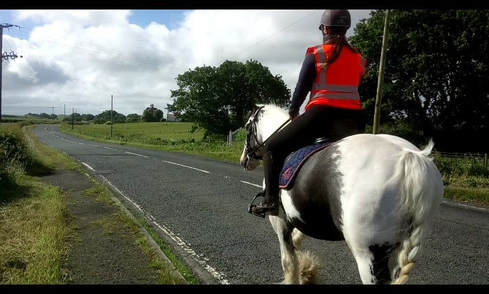
​HI-VIS Clothing.
​
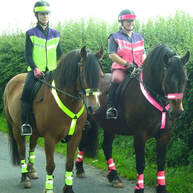
​If there is one thing that is constantly repeated in videos and articles relating to riding and road safety is that they all stress the importance of wearing Hi-vis, so you and your horse will be visible to other road users. What they fail to mention though is what colours should be worn and when. 
​In summer when the sun is shining bright and the grass is being cut giving it a bright tone of yellow,  it can be very difficult to see a horse and rider if they are wearing yellow hi vis gear as they blend in to the background and likewise if a rider is wearing orange in the autumn. See where I'm heading with this?
Here are my ideas as to the most suitable colours to be wearing across the seasons
​SPRING - PINK, ORANGE
​SUMMER - PINK, ORANGE, BRIGHT RED
​AUTUMN - PINK, BRIGHT BLUE
​WINTER - PINK, YELLOW, ORANGE, BRIGHT RED
​Also be sure to refresh your florescent gear fairly often as it can fade over time and wont be as noticeable to other road users than it may have been before.
Hi-vis is not expensive. I bought two new, different coloured waistcoats for less than £10 on ebay, so there really is no excuse for not putting something on.

​​Mobile Phones and Emergency contacts.
​Obviously everyone carries a mobile when they are riding their horse right? Well you would be surprised just how many don't. In a recent local incident where a rider fell off her horse on a grass track and broke her leg, said rider was unable to raise the alarm as she had no phone with her, it was only when the horse was spotted galloping home by someone from the yard that anyone even knew she was out riding. It took over half an hour to locate the rider and luckily she was being aided by a dog walker who had come across her by chance.
Which brings me to my next question. How many of you have a lock/password on your phone?
​Lets take this scenario. You are out riding or even walking and have an accident which leaves you unconscious. If you are lucky enough that someone finds you and tries to use your phone to get an emergency contact it would be impossible if you have a lock on it. During the fiasco your horse has made a run for it and is found by a complete stranger, how would they be able to contact the essential people to help get your horse home safely?
​I cant stress enough the importance of having written emergency contact details and any major medical conditions attached in a visible place on both yourself and your horse, both when out on a hack and at competitions, it can save so much time and stress if the worst case scenario should unfold.

Picture
Be aware of your POSITION.
​Now I'm not talking about your riding position here, I'm talking about how you place yourself and your horse on the road and how this can come across to other road users.
​There are many videos circulating the web right now of drivers passing horses far to close, which is dangerous. Yet I find myself watching some of these clips and thinking to myself, had the rider positioned her horse better on the road the vehicle may have thought twice about passing at the moment in time.
  • ​Pavements and grass verges are a BIG NO! Firstly riding your horse on a pavement is against the law and secondly if you ride on the verge and are positioned completely off the road, a car driver who is unaware that a horse can be easily spooked (yes there are genuine people out there who know nothing about horses) would think that your horse is under total control and proceed to drive at normal speeds without moving over. By positioning yourself like this you give your horse no escape route should he get scared. 
  • Riding in the gutters edge is another very dangerous place to position your horse, not only are you giving drivers the illusion that there may be enough space to pass but this is normally where grates and man covers are placed which can be very slippery for a horse to stand on

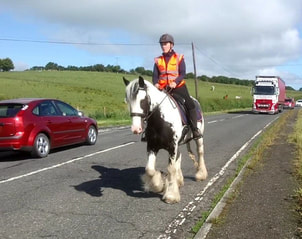
The best place you can possibly situate you and you horse on the road is approximately 1/3 of the way in from the outer edge of the tarmac or around about where the passengers tyre of the car would sit on the road. This gives you and your horse enough room should your horse get a little antsy at something, it will also make drivers think twice before trying to squeeze past.
​
LETTING CARS PASS
​
​Many moons ago I was advised by an old horseman that it was unwise to tell a vehicle it was safe to come around your horse by waving them past. When I curiously asked why (as I had always been taught to do this) he replied that should I be wrong in my judgement and the vehicle have an accident or my horse spook at that moment and hit said vehicle then I could be held accountable in the eyes of the law. So always allow the vehicle to make the decision as to when they will pass you.

​CHOOSE YOUR RIDES WISELY.
​Again it may sound pretty obvious to some but I see many riders out on main roads during times where you would expect the roads to be busy such as rush hours. (8-9.30 am and 4-6pm) Now if you ask me this is just placing yourself in a situation where there is a higher chance of an incident with vehicles. Always aim for times when the roads will be quieter to lessen the probability of something happening. 

​These are just a selection of tips I have learnt by experience over the years. At the end of the day not one single person on this earth is going to deliberately run into a Horse and rider on the roads and damage their vehicle. The majority of accidents happen through either lack of knowledge, lack of concentration.......or both. 
​What really matters is that you have done your absolute best to make sure you and your horse are safe and seen. I hope these tips help and if you have any more please do leave us a comment and share them with us.

​SS

5 Comments
Sam peacefullday
6/20/2018 09:37:00 pm

Hi thanks for that i allways give someone in charge at our yard the nod so they know if we are not back in a hour to come looking.We often have to ask drivers to slow down but have had nothing but helpfull good drivers we try to go when its quiet as he can easily spook out on our own something we are trying to get used to but i love being out i do everything you said but at my age i ought to.good advice helps us all young and old.

Reply
Steffanie Singleton
6/20/2018 11:20:31 pm

Great sounds like you have it pretty sussed. It's always handy to have a quick reminder to refresh your mind.

Reply
Sue Randall
6/21/2018 12:04:30 am

Great article. Some other tips:
If there is an obstruction in the other lane, such as a parked car, move out to the middle to block your lane for the duration. You don't want someone squeezing through the gap!
If you are passing a parked car, go wide, into the middle of the oncoming lane. You want to make sure an oncoming vehicle stops, rather than squeeze by. And it gives you room in case your horse spooks, don’t want to damage the parked car because you’d be liable.
If turning right, stop on the left of your lane and signal. Do not go to the white line and wait - just asking for someone to undertake you.
If turning right, or crossing a road in a group, do your best to all turn or cross at the same time, not in a long line. Safer, and gets you all out of the way quicker.

Reply
Mike Bowen
6/21/2018 01:36:46 am

Well done for that. These turning right rules are in the BHS Riding And Road Safety Manual (recently updated and amended) and clearly should have been included. It’s Very important to prevent or at least discourage drivers overtaking you when you are passing an obstruction - and also to be overtaking another car alongside you - or to prevent them overtaking you and another car at the same time. It’s vital to be proactive, constantly alert and control your space.
Change your position in the road edge especially on narrower roads so that you can see around bends and Be Seen earlier by folks following or approaching you.
There’s a lot more meat in this subject than you have covered. Read the BHS Safety Manual and an advanced driving manual. All the tips in those are very relevant to horse riding.
Take account of road surface conditions and cars need extra space on wet roads and are a greater danger.
Always have bright hibiscus hat ! Can be seen over hedge rows much sooner. Lots more can be included. Don’t go out in fog or mist. Be prepared for cold - dress properly, flimsy clothes and shoes are hazardous in falls or emergency situations. Most dangerous time is Dusk!!
Well done for this blog. Add these in if you wish and remove comment is fine with me.
(Ex-police traffic and accident investigator. )

Reply
niavoequestrian link
3/15/2021 10:30:31 pm

Its really an informative post! Thanks for sharing

Reply


Leave a Reply.

    FOLLOW OUR SOCIALS FOR DAY TO DAY ANTICS.

    Categories

    All
    Riding And Competition
    Stable Management

    RSS Feed

Services

Author & Writer
Freelance Qualified Riding Coach
Educational Workshop Provider & Speaker

Email: [email protected]
Tel: 07763805845
​
© COPYRIGHT 2019 - 2023. ALL RIGHTS RESERVED.
  • Home
  • The Cob Shop
    • The Little Cob That Could
    • A Lesson Well Learned
    • Little Cob That Saved Christmas
  • About the Author
  • Characters
  • Our Adventures
  • Cob Blog
  • Get Involved